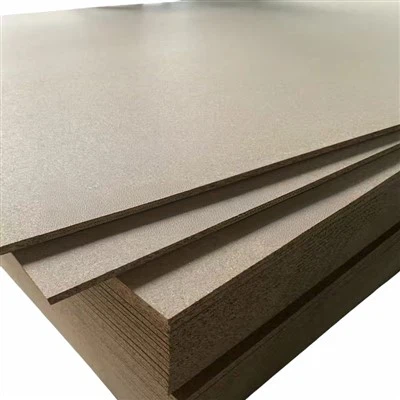
As a leading Packaging Boards supplier, understanding how to test the strength of packaging boards is crucial. In this blog, I will share some common and effective methods for testing the strength of packaging boards, which will not only help us ensure the quality of our products but also meet the diverse needs of our customers.
Edge Crush Test (ECT)
The Edge Crush Test is one of the most important tests for packaging boards. It measures the edgewise compressive strength of a corrugated board. This test is significant because in real - world scenarios, packaging boards often experience pressure on their edges during stacking, transportation, and storage.
To conduct an ECT, a small sample of the corrugated board is cut. The sample is then placed between two parallel platens in a testing machine. The machine applies a gradually increasing force until the board fails. The maximum force the board can withstand before failure is recorded as the ECT value. This value is usually expressed in pounds per linear inch (lb/in) in the imperial system or kilonewtons per meter (kN/m) in the metric system.
A high ECT value indicates that the board can better resist edge - wise compression. For example, if a packaging board is used to stack heavy products, a high ECT value ensures that the board will not collapse under the weight of the stacked items. This is especially important for shipping large and heavy goods, where the packaging needs to maintain its integrity throughout the supply chain. You can learn more about our Packaging Boards which are designed to have excellent ECT performance.
Bursting Strength Test
The Bursting Strength Test measures the ability of a packaging board to withstand pressure from the inside. It simulates the situation where a product inside the package exerts pressure on the board, such as when the product expands or when there is internal pressure due to environmental factors.
In this test, a circular sample of the board is clamped between two rings. A rubber diaphragm is then pressed against the sample at a constant rate. The pressure is increased until the board bursts. The maximum pressure at which the board bursts is recorded as the bursting strength. This value is typically measured in pounds per square inch (psi) or kilopascals (kPa).
A high bursting strength is essential for packaging products that may cause internal pressure, such as liquids or products that are prone to expansion. For instance, if you are packaging a liquid - filled container, a packaging board with high bursting strength will prevent the package from leaking or bursting due to the pressure exerted by the liquid.
Puncture Resistance Test
Puncture resistance is another important aspect of packaging board strength. This test measures the ability of the board to resist punctures from sharp objects. In the supply chain, packages may come into contact with sharp edges, nails, or other pointed objects, which can damage the packaging and the product inside.
To perform a puncture resistance test, a probe with a specific shape and size is used to penetrate the board at a constant speed. The force required to puncture the board is measured. A higher puncture resistance means that the board can better protect the product from being damaged by sharp objects.
For example, if you are packaging fragile electronic devices, a packaging board with high puncture resistance can prevent the devices from being punctured by sharp objects during handling and transportation. Our Packaging Boards are engineered to have good puncture resistance to ensure the safety of your products.
Flexural Strength Test
Flexural strength refers to the ability of a packaging board to resist bending. In many cases, packaging boards need to be folded or bent during the packaging process. A board with good flexural strength can withstand these bending operations without cracking or breaking.
The flexural strength test is conducted by placing a sample of the board on two supports and applying a load at the center of the board. The load is gradually increased until the board bends or breaks. The maximum load that the board can withstand before failure is recorded as the flexural strength.
Good flexural strength is important for packaging designs that require folding, such as boxes with flaps. It ensures that the packaging can be assembled properly and maintain its shape during use. For example, a well - designed box with high flexural strength can be easily folded into the desired shape and will not lose its structural integrity over time.
Moisture Resistance and Its Impact on Strength
Moisture can significantly affect the strength of packaging boards. When a board absorbs moisture, its strength can decrease rapidly. This is because the fibers in the board become weakened, and the bonding between the layers may be disrupted.
To test the moisture resistance of packaging boards, a sample is exposed to a controlled environment with a specific humidity level for a certain period. After the exposure, the board's strength is tested using the methods mentioned above. If the strength of the board after moisture exposure is significantly lower than its original strength, it indicates that the board has poor moisture resistance.
To improve moisture resistance, various treatments can be applied to the packaging boards, such as coating with a water - resistant material. Our Packaging Boards are available with different moisture - resistant options to meet the needs of different applications.


Importance of Testing for Different Applications
Different applications require different levels of packaging board strength. For example, if you are packaging lightweight consumer goods, the requirements for strength may be relatively low. However, if you are packaging heavy industrial products or fragile items, high - strength packaging boards are necessary.
For heavy industrial products, such as machinery parts, the packaging needs to be able to withstand high levels of compression, impact, and vibration during transportation. In this case, boards with high ECT, bursting strength, and puncture resistance are required.
For fragile items, such as glassware or electronics, the packaging needs to provide good cushioning and protection. A combination of high - strength boards and appropriate cushioning materials is essential to ensure the safety of the products.
Our Product Range and Quality Assurance
As a Packaging Boards supplier, we offer a wide range of products to meet different customer needs. Our Packaging Boards are manufactured using high - quality materials and advanced production processes. We conduct rigorous testing on all our products to ensure that they meet the highest quality standards.
In addition to Packaging Boards, we also offer Decorative Wood Veneer Panels and Wall Panels for Construction. These products also undergo strict quality control to ensure their performance and durability.
Contact Us for Procurement
If you are interested in our Packaging Boards or other products, we welcome you to contact us for procurement. Our professional team can provide you with detailed product information, technical support, and customized solutions. We are committed to providing high - quality products and excellent services to meet your packaging and construction needs.
References
- ASTM International. (20XX). Standard test methods for corrugated and solid fiberboard containers and related structures.
- TAPPI (Technical Association of the Pulp and Paper Industry). (20XX). Test methods for paper and board properties.