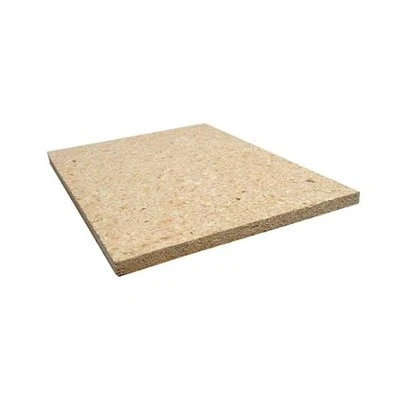
Moisture-resistant board is made by adding a certain proportion of moisture-resistant particles during the production of the base material. Also known as melamine board (base material), it significantly reduces the degree of swelling when the board is exposed to water. Moisture-resistant board originated in Europe.
When ordinary base material and moisture-resistant base material are soaked in water simultaneously, the expansion after two hours shows that the expansion rate of ordinary board is significantly higher than that of moisture-resistant board. Moisture-resistant board has good moisture resistance and is suitable for kitchen and bathroom furniture.
Determining the quality of moisture-resistant board generally involves three aspects:
(1) Environmental friendliness: This mainly refers to whether the glue used is urea-formaldehyde glue or melamine glue. The latter is very environmentally friendly, but this is not easy for ordinary customers to identify. Smelling the board is also not a reliable method; some boards may have no smell after being stored for a long time, while others may have a strong smell if kept in a sealed environment for a long time. The smell is also much stronger in hot weather. A better method is to combine the inspection report with the markings on the board. Looking only at the inspection report is not sufficient, because a factory may produce different grades of boards, and the inspection report may not correspond to the grade of the board in question. Combining the grade markings on the board with the inspection report is much more reliable. Generally, manufacturers and retailers can make misleading claims, and even the order forms can be inaccurate. Verbal claims can be denied, and written statements can be claimed as mistakes, but markings on the product itself are not so easily changed.
(2) Physical properties: Such as bonding strength, deformation resistance, strength, etc. This is generally difficult for untrained people to assess. Generally, it can be judged by the following: the particles in the moisture-resistant board should not be too large, as this would result in insufficient strength, nor should they be too small, as this might indicate the use of sawdust. Cut the board and examine the cross-section (it should be irregular; a smooth surface won't reveal much), and see how many needle-shaped particles are present.
(3) Moisture resistance: This is even more difficult to judge. The only way is to take different brands home and soak them in water to compare.