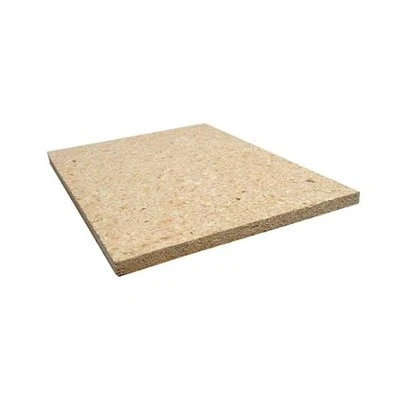
According to industry insiders, the environmental friendliness of blockboard is largely dependent on the environmental friendliness of the adhesive used in its production. Since the main raw material for engineered wood products is urea-formaldehyde resin as an adhesive, this adhesive is readily available, inexpensive, and relatively simple to produce, making it a core raw material product that the wood product industry has relied on for a long time. Foreign countries began researching solutions to formaldehyde pollution in the 1960s. Developed countries and regions such as Europe, Japan, and the United States successively formulated strict formaldehyde emission standards in the 1990s. Through continuous technological advancements, they gradually achieved industry standards equivalent to the European E-class and Japanese F-class standards.
Laminated lumber: Free from formaldehyde concerns
A type of laminated material made from solid wood that has recently entered the market is expected to become a substitute for blockboard and other engineered wood products. According to reports, this laminated board is made from imported Alaskan spruce, cut into strips of different lengths, and joined using the internationally popular finger-jointing method. Because the entire base material consists of solid wood strips, the adhesive is only used for bonding between the solid wood strips, and an internationally recognized environmentally friendly adhesive is used. The maximum formaldehyde content is only 2mg/100g, far below the national standard of less than 9mg/100g for Class A environmentally friendly decorative panels. Even newly manufactured products have no noticeable odor.
It is understood that this type of laminated board is used in construction and home decoration in Europe, the United States, and Japan. Although it is more expensive than blockboard and other engineered wood products, in terms of overall indicators, the cost is not significantly higher. Blockboard requires surface treatment, veneering, and sanding depending on its intended use, so the final cost of products made from blockboard is not low. This laminated board, however, has a smooth surface and beautiful spruce grain, and can be directly painted without further sanding or veneering, making it suitable for decorative panels and furniture, thus keeping production costs relatively low.