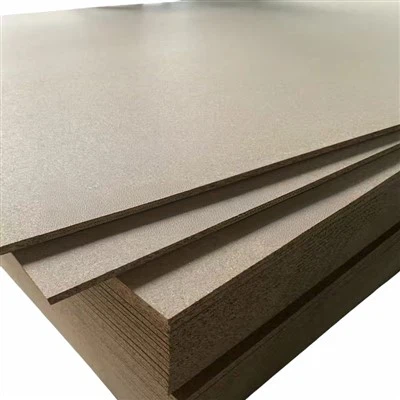
As a supplier of oriented strand board (OSB), I've witnessed firsthand the growing popularity of this versatile building material. OSB is a type of engineered wood product made from thin strands of wood that are oriented in specific directions and bonded together with resin. It's known for its strength, durability, and cost - effectiveness, making it a top choice for a wide range of construction applications. One of the key properties that make OSB so valuable is its impact resistance. In this blog, we'll explore what impact resistance means for OSB, how it's measured, and why it matters in construction.
What is Impact Resistance?
Impact resistance refers to a material's ability to withstand sudden forces or blows without breaking, cracking, or deforming significantly. In the context of OSB, impact resistance is crucial because it determines how well the board can handle the stresses and strains of construction, transportation, and everyday use. For example, during the construction process, OSB panels may be subject to accidental impacts from tools, equipment, or falling objects. In a finished building, the boards may need to withstand impacts from furniture, people, or other sources.
Measuring Impact Resistance of OSB
There are several methods used to measure the impact resistance of OSB. One common test is the drop - weight test. In this test, a weighted object is dropped onto the OSB panel from a specific height. The height and weight of the object are carefully controlled, and the panel is then inspected for damage. The amount of damage, such as cracks or splintering, is used to evaluate the panel's impact resistance.
Another method is the pendulum impact test. In this test, a pendulum is swung against the OSB panel, and the energy absorbed by the panel is measured. The higher the energy absorbed, the better the impact resistance of the panel.
Factors Affecting the Impact Resistance of OSB
Several factors can influence the impact resistance of OSB.
- Wood Species: Different wood species have different physical properties, which can affect the strength and impact resistance of the OSB. For example, some hardwoods are denser and stronger than softwoods, and OSB made from these hardwoods may have better impact resistance.
- Strand Orientation: The orientation of the wood strands in the OSB panel plays a significant role in its impact resistance. Strands that are oriented in a specific direction can provide better strength and resistance to impacts in that direction. Most OSB panels are designed with multiple layers of strands oriented in different directions to provide balanced strength in both the longitudinal and transverse directions.
- Resin Type and Content: The type of resin used to bond the wood strands together and the resin content can also affect the impact resistance of OSB. High - quality resins can provide better adhesion between the strands, resulting in a stronger and more impact - resistant panel.
- Panel Thickness: Thicker OSB panels generally have better impact resistance than thinner ones. This is because they have more material to absorb the impact energy.
Importance of Impact Resistance in Construction
The impact resistance of OSB is of great importance in construction for several reasons.
- Durability: A high - impact - resistant OSB panel can withstand the rigors of construction and long - term use, reducing the need for frequent repairs or replacements. This can save time and money in the long run.
- Safety: In construction, safety is a top priority. OSB panels with good impact resistance can help prevent accidents by withstanding impacts from tools, equipment, or falling objects. This can protect workers on the construction site and ensure the safety of the building's occupants.
- Versatility: OSB with high impact resistance can be used in a variety of applications, including floors, walls, and roofs. It can handle the stresses and strains associated with different types of construction projects, making it a versatile choice for builders.
Our OSB Products and Their Impact Resistance
As a supplier, we offer a range of OSB products, each with different levels of impact resistance to meet the diverse needs of our customers.
- Moisture - resistant OSB Plywood: This type of OSB is designed to resist moisture, which can also enhance its impact resistance. The moisture - resistant properties help prevent the wood strands from swelling or warping, maintaining the integrity of the panel and its ability to withstand impacts.
- OSB Waterproof Board: Our waterproof OSB board has excellent impact resistance. It is made with high - quality resins and carefully selected wood strands, providing a strong and durable solution for applications where water resistance and impact resistance are both required, such as in outdoor construction or in areas prone to moisture.
- Standard OSB Board: Our standard OSB board offers reliable impact resistance for general construction applications. It is cost - effective and provides a good balance of strength and impact resistance, making it a popular choice for many builders.
Choosing the Right OSB for Your Project
When choosing an OSB product for your project, it's important to consider the level of impact resistance required. If your project involves heavy - duty use or is in an area where impacts are likely, such as a commercial building or a high - traffic area, you may want to choose a high - impact - resistant OSB. On the other hand, if your project is a residential application with less risk of impacts, a standard OSB may be sufficient.
Contact Us for Your OSB Needs
If you're interested in learning more about our OSB products and their impact resistance, or if you're ready to place an order, we encourage you to contact us. Our team of experts is available to answer your questions, provide technical support, and help you choose the right OSB product for your project. We are committed to providing high - quality products and excellent customer service. Whether you're a contractor, builder, or DIY enthusiast, we have the OSB solutions you need.


References
- Forest Products Laboratory. (2010). Wood Handbook: Wood as an Engineering Material. U.S. Department of Agriculture, Forest Service.
- ASTM International. (2019). Standard Specification for Oriented Strand Board (OSB). ASTM D2079 - 19.