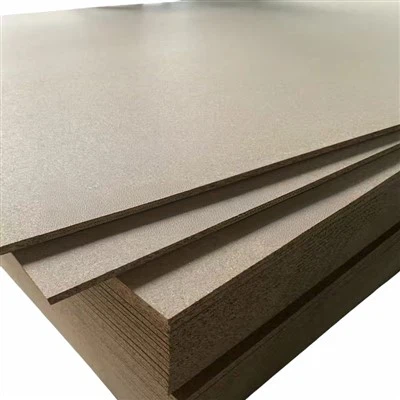
Particleboard, a widely used engineered wood product, has become an essential material in various industries, from furniture manufacturing to construction. As a leading particleboard supplier, I am often asked about the density of particleboard and its significance. In this blog post, I will delve into the concept of particleboard density, its impact on the product's properties, and how it relates to different applications.
Understanding Particleboard Density
Density is a fundamental property of particleboard that refers to the mass of the material per unit volume. It is typically measured in kilograms per cubic meter (kg/m³). The density of particleboard can vary significantly depending on several factors, including the type of wood particles used, the manufacturing process, and the intended application.
Particleboard is made by compressing wood particles with a binder under high pressure and temperature. The density of the final product is determined by the amount of wood particles and binder used, as well as the degree of compression. Generally, higher density particleboard is made by using more wood particles and applying greater pressure during the manufacturing process.
Types of Particleboard Based on Density
Particleboard can be classified into different types based on its density. The most common types include:
- Low-density particleboard: This type of particleboard has a density ranging from 220 to 450 kg/m³. It is lightweight and is often used for applications where weight is a concern, such as in packaging and interior partitions.
- Medium-density particleboard (MDF): MDF has a density ranging from 450 to 800 kg/m³. It is a popular choice for furniture manufacturing, cabinetry, and interior trim due to its smooth surface, uniform density, and good machining properties.
- High-density particleboard: High-density particleboard has a density greater than 800 kg/m³. It is strong, durable, and resistant to wear and tear. It is commonly used for applications that require high strength and stability, such as in flooring and structural components.
Impact of Density on Particleboard Properties
The density of particleboard has a significant impact on its physical and mechanical properties. Here are some of the key properties affected by density:
- Strength: Higher density particleboard generally has greater strength and stiffness. This makes it more suitable for applications that require load-bearing capacity, such as in furniture and construction.
- Moisture resistance: Density can also affect the moisture resistance of particleboard. Higher density particleboard is less porous and therefore more resistant to moisture absorption. This makes it a better choice for applications in humid environments, such as bathrooms and kitchens.
- Machinability: The density of particleboard can also affect its machinability. Lower density particleboard is generally easier to cut, drill, and shape, while higher density particleboard may require more powerful tools and techniques.
- Surface quality: Higher density particleboard typically has a smoother and more uniform surface, which makes it more suitable for applications that require a high-quality finish, such as in furniture and cabinetry.
Choosing the Right Density for Your Application
When choosing particleboard for a specific application, it is important to consider the density of the material. Here are some factors to consider:


- Load-bearing requirements: If the application requires load-bearing capacity, such as in furniture or construction, a higher density particleboard may be necessary.
- Moisture exposure: If the application is in a humid environment, such as a bathroom or kitchen, a higher density particleboard with good moisture resistance may be required.
- Machinability: If the application requires extensive machining, such as cutting, drilling, or shaping, a lower density particleboard may be easier to work with.
- Surface finish: If the application requires a high-quality finish, such as in furniture or cabinetry, a higher density particleboard with a smooth surface may be preferred.
Our Particleboard Products
As a particleboard supplier, we offer a wide range of particleboard products with different densities to meet the needs of various applications. Our products include Moisture Resistant Particle Board, Waterproofing Particle Board Flooring, and Environmentally Friendly Particleboard.
Our moisture-resistant particle board is designed to withstand high humidity and moisture, making it ideal for use in bathrooms, kitchens, and other areas prone to moisture. Our waterproofing particle board flooring is specifically engineered to provide excellent water resistance and durability, making it a popular choice for residential and commercial flooring applications. Our environmentally friendly particleboard is made from sustainable materials and is free from harmful chemicals, making it a safe and eco-friendly choice for your projects.
Contact Us for Particleboard Procurement
If you are interested in purchasing particleboard for your project, we would be happy to assist you. Our team of experts can help you choose the right density and type of particleboard for your specific needs. We offer competitive prices, high-quality products, and excellent customer service.
To learn more about our particleboard products or to request a quote, please contact us today. We look forward to working with you and helping you achieve your project goals.
References
- ASTM International. (2019). Standard Specification for Particleboard. ASTM D1037-19.
- Forest Products Laboratory. (2010). Wood Handbook: Wood as an Engineering Material. General Technical Report FPL-GTR-190.
- Hoadley, R. B. (2000). Understanding Wood: A Craftsman's Guide to Wood Technology. The Taunton Press.